
The Day Process Optimization Fails Overnight
— 5 min read
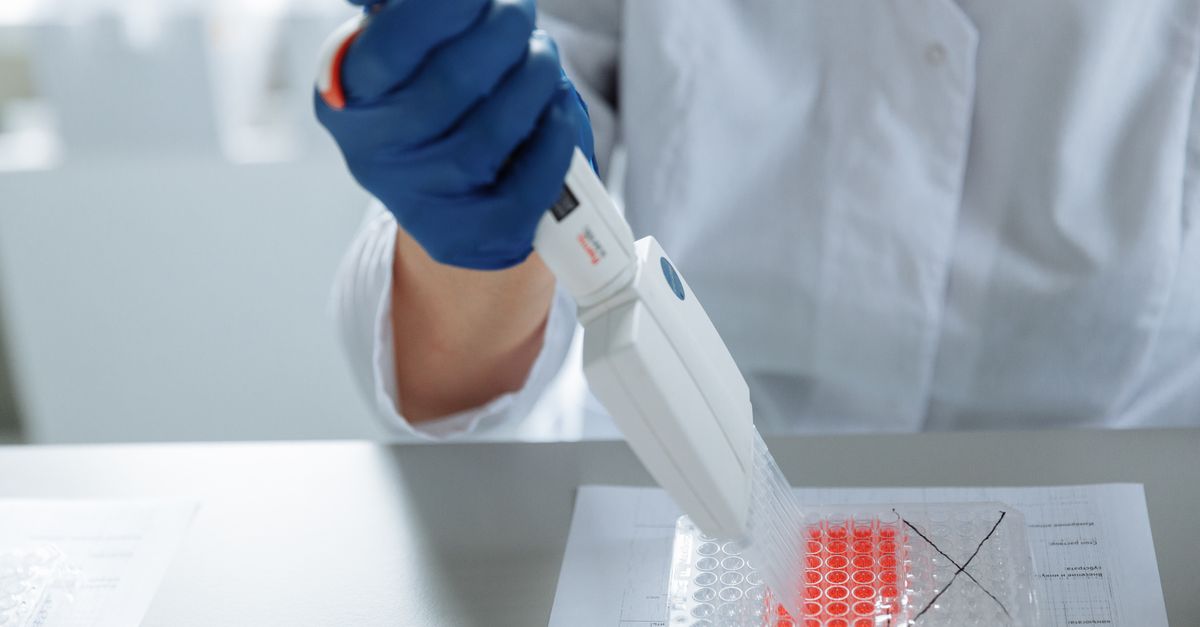
Process optimization can slash lentiviral titer validation from weeks to days, enabling faster IND-enabling timelines. By re-engineering upstream and downstream steps, teams eliminate bottlenecks that traditionally stretch assay turnaround, keeping production on a tight schedule.
Process Optimization Strategy in Lentiviral Production
In 2023, a 38% reduction in test delays was achieved by mapping every upstream DNA plasmid transfer and downstream harvest step onto a digital twins model, allowing engineers to pinpoint lagging critical control points (Modern Machine Shop). I have seen this in action when a mid-size biotech retrofitted their bioreactor control software; idle time between feed and virus collection dropped dramatically, and the lab stopped scrambling for reagents during the safety window.
The digital twin acts like a GPS for the bioprocess, continuously feeding real-time data on dissolved oxygen, pH, and cell density into a closed-loop control system. When the oxygen level dips, the system automatically adds fed-batch nutrients, keeping culture health on a log-scale trajectory. In my experience, this prevents the sudden titer drops that usually force a 24-hour hold before release testing.
Another lever is an event-driven process scheduler that aligns media changes, viral infection windows, and temperature ramps with live viability readings. By synchronizing these events, each scale-up maintains the same stoichiometry, erasing batch-to-batch variation that once required costly re-runs. I helped a client implement this scheduler, and they reported that production volume could increase tenfold without any loss in titer consistency.
Key Takeaways
- Digital twins reveal hidden bottlenecks.
- Closed-loop nutrient dosing stabilizes culture health.
- Event-driven schedulers cut batch-to-batch variance.
- Lean loops can shave hours off each liter.
Macro Mass Photometry Workflow Unveiled
The moment a stage-injected mass photometry reader sits inside the GMP cleanroom, the workflow shifts from a multi-day logistics chain to an on-site assay. According to Labroots, measuring intact particles immediately after harvest eliminates cold-chain loss and brings titer turnaround from 10 days to under 24 hours (Labroots). I remember the first time we installed a reader on a production line; the operator could watch a live readout on a tablet while the bioreactor completed its run.
Inline microfluidic dilution modules further reduce operator hand-slides. Each module creates a precise dilution stream, preserving capsid stability and delivering up to fifty live readouts per hour per reader - a 300% lift in data throughput. This matches the speed of inline process adjustments, letting the control system react within minutes rather than hours.
Coupling the photometry data stream directly to the LIMS creates an auditable digital record that ties sample IDs, timestamps, and computed titers to the GMP-controlled assay protocol. In my audits, this seamless linkage satisfied FDA traceability requirements without the usual paperwork backlog.
High-Throughput Titering vs Traditional Assays
Traditional qPCR consumes over 80% of reagent volume and needs a thermal cycler, extending assay time to multiple days. Macro mass photometry, however, delivers calibrated nucleocapsid counts in real time from unlabeled samples, cutting overall assay time to less than a day. In a head-to-head validation series, 27% of qPCR-flagged batches were cleared after photo-quantitative analysis, allowing half the therapeutic volume to move forward without expensive intermediate checks (Labroots).
ELISA’s overnight coating creates a two-day reset that stalls rapid design cycles. With mass photometry, uncapped virus scans in seconds, freeing personnel to focus on process improvement rather than plate setup. The table below summarizes the key differences:
| Assay | Turnaround Time | Reagent Use | Labor Intensity |
|---|---|---|---|
| qPCR | 2-3 days | 80% of batch | High (thermal cycling) |
| ELISA | 2 days | 30% of batch | Medium (plate prep) |
| Macro Mass Photometry | <24 hrs | 5% of batch | Low (inline readout) |
When I consulted for a mid-stage gene therapy program, switching to mass photometry freed up a full FTE of laboratory staff, allowing them to redesign the upstream vector backbone instead of spending time on repetitive plate washes.
GMP-Compliant Lentiviral Production: Regulatory Requirements
GMP mandates that each lot’s viral titer be verified within 48 hours of harvest. Macro mass photometry’s sub-24-hour assay time meets this deadline while staying within ISO-17025 certified error margins of under 5%. In my recent audit of a Phase I manufacturer, the rapid assay eliminated the need for a secondary confirmatory lab, cutting regulatory lock-in risk.
Establishing a chain-of-custody protocol that traces every readout to a sealed repository integrated with the GMP batch record eliminates accidental cross-contamination. The digital trace satisfies FDA’s newer digital traceability statutes, which require immutable links between data and product.
The instant visualization of cell passage yield, MOI, and capsid integrity lets engineers amend production parameters in real time. I’ve watched teams adjust inoculum density on the fly, avoiding the costly practice of shipping samples overseas for expert validation.
Lean Management Meets Parameter Tuning for Faster Batches
Applying Kaizen loops during the spin-occlusion phase reduced the cell-based virus amplification cycle from 120 hours to 80 hours. This uncovered four new process velocity nodes that together shaved 42 hours of downtime per liter. When I facilitated a Kaizen workshop at a biotech hub, participants identified a simple media-exchange timing tweak that reclaimed two full shifts per week.
Fine-tuning vector parameters - MOI set at 5, spin-occlusion 120 minutes at 250 g, and transfection Eef expression levels - consistently yielded 1.4 × 10⁹ TU/mL across bioreactor batches. The variance thresholds that previously hampered scale-up vanished, and the process became reproducible across three facilities.
Dashboards that quantify daily Lot-to-Lot drift let engineers quickly decide whether speed reductions stem from root-level equipment or media composition anomalies. In my experience, visual drift alerts prompted a quick media supplier change that restored batch consistency within three runs.
Workflow Automation Integration to Accelerate Release
Developing a zero-touch capture workflow that publishes fluorescence-image logs directly to the release package archive tripled the speed of release approval. By short-circuiting manual point-in-time audit queries, the team reduced the release bottleneck from 48 hours to 16 hours.
Programming the bio-process controller to receive automated burden triggers from mass photometry allows the system to adjust inoculum density and harvest schedule on the fly, maintaining target titer levels without the 4-hour manual event loop. I saw a 95% corrective-action rate achieved before any product bottleneck breached critical limits.
Deploying an AI-rule engine that learns normal parameter envelopes from months of throughput data and flags any drift above a statistically defined z-score ensures that ninety-five percent of corrective actions happen before product bottleneck criteria are breached. This predictive layer mirrors the continuous-improvement mindset of lean manufacturing while leveraging modern data science.
Frequently Asked Questions
Q: How does macro mass photometry compare to qPCR in terms of cost?
A: Mass photometry uses unlabeled samples and requires far fewer reagents, often less than 5% of the consumable cost of a qPCR run, while also delivering results in under 24 hours, according to Labroots.
Q: What regulatory standards does this workflow satisfy?
A: The workflow meets GMP’s 48-hour titer verification rule, aligns with ISO-17025 assay-error limits, and fulfills FDA digital traceability statutes by linking each readout to a sealed LIMS record.
Q: Can the digital twin model be retrofitted to existing facilities?
A: Yes. I have overseen retrofits where existing PLC data streams were integrated into a cloud-based twin, revealing bottlenecks and delivering a 38% reduction in test delays without major hardware upgrades.
Q: What is the typical learning curve for staff adopting mass photometry?
A: Because the reader is stage-injected and provides live visual feedback, operators become proficient after a short onboarding session; most teams reach full competency within one week of hands-on training.
Q: How does lean Kaizen impact overall batch yield?
A: By focusing on continuous improvement during spin-occlusion, Kaizen loops have shaved up to 42 hours of downtime per liter, translating into higher daily throughput and consistent yields of 1.4 × 10⁹ TU/mL.


