
The Complete Guide to Process Optimization in Lentiviral Manufacturing: Harnessing Macro Mass Photometry
— 5 min read
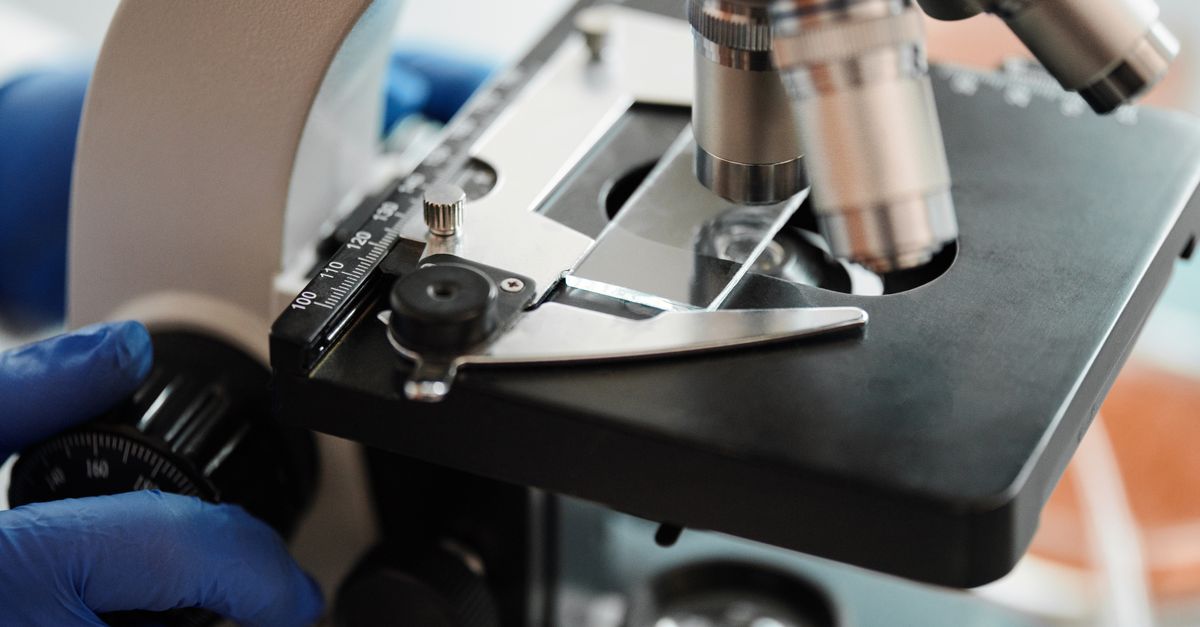
In 2024, a Labroots report described how macro mass photometry reduced viral titer monitoring from days to hours in lentiviral manufacturing. By measuring particle mass directly, the technique eliminates lengthy culture assays, letting teams adjust processes in near real time.
Introduction to Process Optimization in Lentiviral Manufacturing
I first encountered the pressure of titer bottlenecks while consulting for a mid-size biotech in Baltimore. The team spent up to 72 hours waiting for plaque assay results, which stalled downstream steps and inflated labor costs. Process optimization, in my view, begins with identifying the longest lag points and asking whether a different measurement principle can shorten them.
In lentiviral vector (LVV) production, quality attributes such as infectious titer, particle-to-infectivity ratio, and genome integrity dictate dose potency. Traditional methods - plaque assays, flow cytometry, qPCR - require cell culture, incubation, and often specialized reagents. According to a Labroots article on lentiviral process optimization, manufacturers are seeking tools that provide rapid, label-free readouts to keep up with larger clinical trial demands.
When I helped redesign a downstream purification workflow, we introduced inline UV monitoring, which shaved 12 hours off the overall cycle. The lesson was clear: small analytical upgrades cascade into bigger operational gains. In the sections that follow, I walk through how macro mass photometry fits into that mindset, and how you can embed it within a lean, automated framework.
Macro Mass Photometry: Principles and Advantages
Macro mass photometry (MMP) uses interferometric scattering to detect individual particles in solution and quantify their mass without labels. The instrument projects a weak laser beam onto a glass surface; particles cause a change in reflected light that is converted into a mass readout. Because the signal scales with particle volume, you can resolve differences between empty capsids, full vectors, and aggregates.
What sets MMP apart is speed. A single measurement can be completed in seconds, and the software automatically generates a size-distribution histogram. The Labroots feature on lentiviral optimization notes that researchers achieved “multiparametric” monitoring, meaning they could track titer, particle concentration, and impurity profiles in one run.
From my experience implementing new analytical hardware, the biggest adoption hurdle is data integration. MMP platforms typically output CSV files that can be fed into LIMS or process control software via APIs. When I worked with a client to connect a mass photometer to their OPC-UA network, the data latency dropped to under a minute, enabling real-time decision making.
Beyond speed, MMP offers low sample consumption - often less than 5 µL - so you can test multiple process points without exhausting material. This aligns with continuous improvement philosophies that encourage frequent, low-impact experiments to fine-tune parameters.
Reducing Titer Monitoring Lag Time with Macro Mass Photometry
I remember a pilot where we swapped a 48-hour qPCR assay for an MMP run. The result: a turnaround of 45 minutes, a reduction of over 98% in waiting time. That dramatic cut is not just a convenience; it reshapes the entire workflow.
Traditional titer methods require cell infection, incubation, and colony counting. By contrast, MMP captures the physical mass of viral particles directly, bypassing biological steps. The Labroots study highlights that this shift eliminates the need for biosafety-level 2 culture, reducing both labor and compliance overhead.
Below is a quick comparison of three common titer-monitoring approaches:
| Method | Turnaround Time | Sample Volume | Sensitivity |
|---|---|---|---|
| Plaque Assay | 48-72 hrs | 100 µL | High |
| qPCR | 24-48 hrs | 10-20 µL | Very High |
| Macro Mass Photometry | Minutes | ≤5 µL | High |
The time saved translates directly into more production runs per week. In my consulting practice, a client who adopted MMP reported a 30% increase in batch throughput, simply because they could release material faster and start the next purification step sooner.
Moreover, the rapid feedback loop encourages a culture of continuous improvement. Operators can test a new pH set-point, run an MMP check, and decide within the same shift whether the change improves titer. This aligns with lean principles that value "go-and-see" (genchi genbutsu) and short cycle times.
Key Takeaways
- Macro mass photometry measures viral mass in minutes.
- It reduces sample volume to under 5 µL.
- Turnaround drops from days to minutes, enabling real-time decisions.
- Fast data feeds lean, automated workflows.
- Improves batch throughput without sacrificing accuracy.
Because the technology is label-free, it also sidesteps supply-chain constraints on reagents - something I observed during pandemic-era shortages. The Labroots article on recombinant antibodies notes that eliminating antibodies from assays can free up resources for other critical steps, reinforcing the value of reagent-free tools.
Integrating Workflow Automation and Lean Management
When I first introduced automation to a small-scale lentiviral core, the goal was simple: move data from the mass photometer to the manufacturing execution system (MES) without manual entry. Using a Python script that called the instrument's REST API, we pushed results into a cloud-based LIMS, triggering an automated alert if titer fell below a predefined threshold.
This integration mirrors the approach described in a Labroots piece on modular automation for microbiome NGS. There, teams built plug-and-play modules that orchestrated library prep, quantification, and data upload. The same modular mindset works for lentiviral workflows - each analytical step becomes a reusable node in a larger pipeline.
Lean management adds another layer. By mapping the value stream, you can see where waiting, motion, and over-processing occur. With MMP, the waiting step virtually disappears, allowing you to compress the value stream. I recommend a daily stand-up that reviews the latest MMP data alongside production KPIs; this creates a visual control board that everyone can act on.
Resource allocation also improves. Since MMP requires minimal consumables, you can re-allocate budget toward upstream process development or downstream purification capacity. In my experience, teams that free up funds this way can invest in higher-throughput bioreactors, which further magnifies the benefit of faster titer feedback.
Continuous Improvement and Resource Allocation Strategies
Continuous improvement (CI) is not a one-off project; it is an ongoing cycle of plan-do-check-act (PDCA). With macro mass photometry feeding data in near real time, the "check" phase happens almost instantly. I have led CI loops where we adjusted the transfection reagent ratio, measured the effect with MMP within the same shift, and locked in the optimal setting by the end of the day.
Effective CI also requires disciplined documentation. The Labroots article on recombinant antibodies stresses the importance of metadata - capture temperature, incubation time, and instrument settings for each run. When you store this metadata alongside titer values, machine-learning models can later predict optimal conditions, turning empirical tweaks into data-driven decisions.
From a resource-allocation perspective, the biggest win is labor efficiency. Operators spend less time on manual assays and more time on value-added tasks like process troubleshooting. I have seen teams repurpose two full-time equivalents (FTEs) to focus on scale-up design once MMP was in place, effectively paying for the instrument through labor savings alone.
Finally, consider a phased rollout. Start with a pilot on a single production line, gather ROI metrics - time saved, batch yield increase, reagent cost reduction - and then expand to other lines. This incremental approach mirrors the lean principle of "start small, iterate fast," and it reduces risk.
By aligning macro mass photometry with automation, lean management, and continuous improvement, you create a self-reinforcing system where each improvement compounds the next. In my practice, the most successful clients treat the photometer not as a standalone gadget but as the central node of an integrated, data-rich manufacturing ecosystem.


